Origin
Phulkari references appear in Punjabi folklore for centuries — most famously in the love ballad of Heer Ranjha by Waris Shah. It was never courtly art. It was made by women, at home, for their daughters.
Phulkari vs Bagh
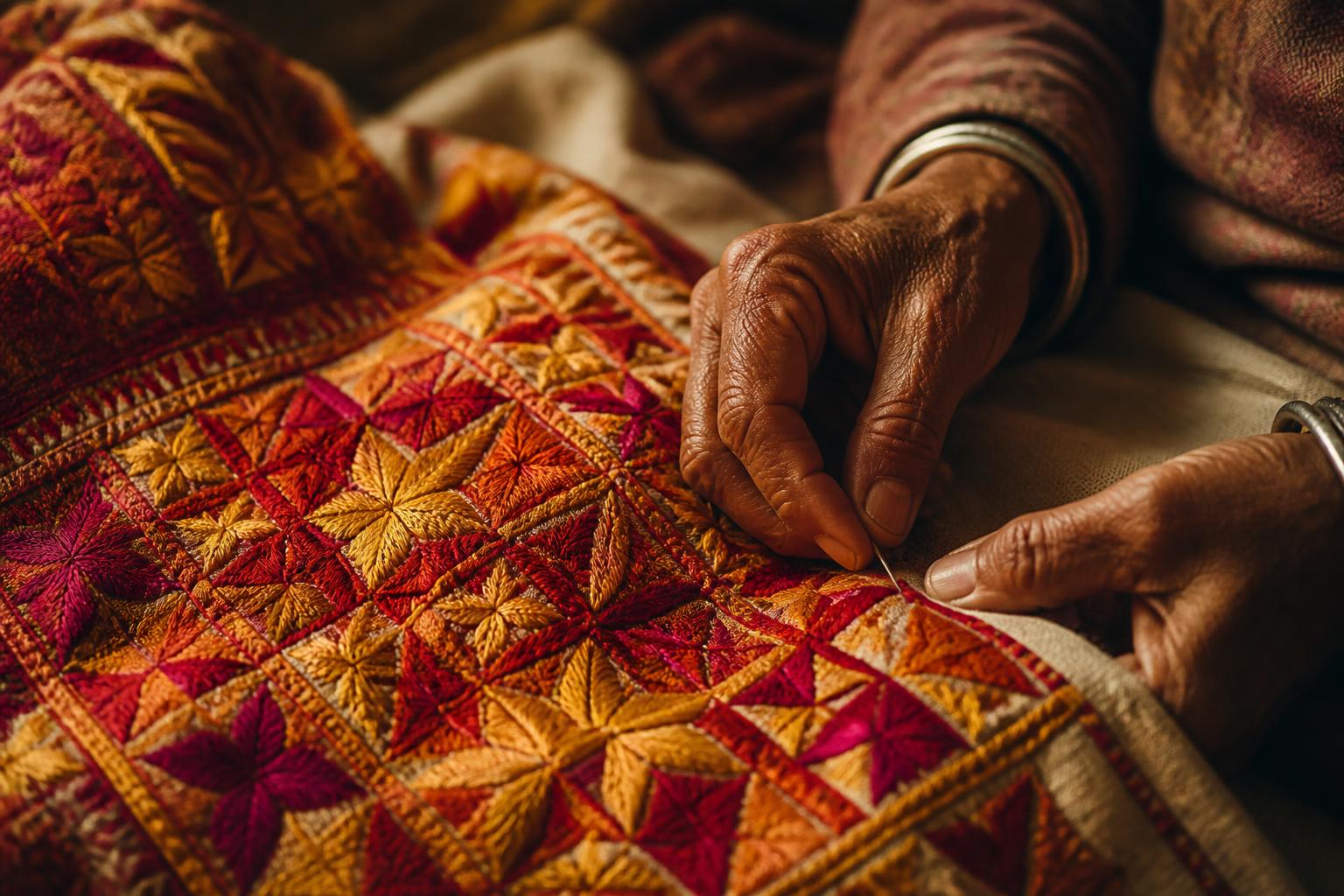
In a phulkari, the base cloth still shows between motifs. In a bagh ('garden'), the embroidery covers the entire surface — no khaddar visible. A bagh could take a woman a full year to complete and was reserved for the most important weddings.
The Stitch and the Colour
The traditional stitch is a simple darning stitch — but worked in silk floss called pat, in fierce colours: mustard, magenta, crimson, emerald. The palette is loud on purpose. Punjab does not do quiet.
Regional Variations
Chope phulkari from Malwa, tilpatra from Doaba, sainchi phulkari with narrative motifs of village life — each region added its dialect to the thread.
Phulkari Today
Machine reproductions flood the market, but true phulkari — hand-embroidered, on khaddar — is a slow craft kept alive by artisans in villages across Patiala, Bathinda and Amritsar. BAAG references phulkari in graphic language and print — a bridge between the loom and the streetwear rack.
Frequently Asked
- What is phulkari?
- Phulkari is the traditional folk embroidery of Punjab, worked in silk floss on handspun khaddar cloth, most famously used on dupattas and shawls.
- What is the difference between phulkari and bagh?
- In phulkari the base fabric is visible between motifs. In bagh, the embroidery covers the entire cloth so the base is completely hidden.