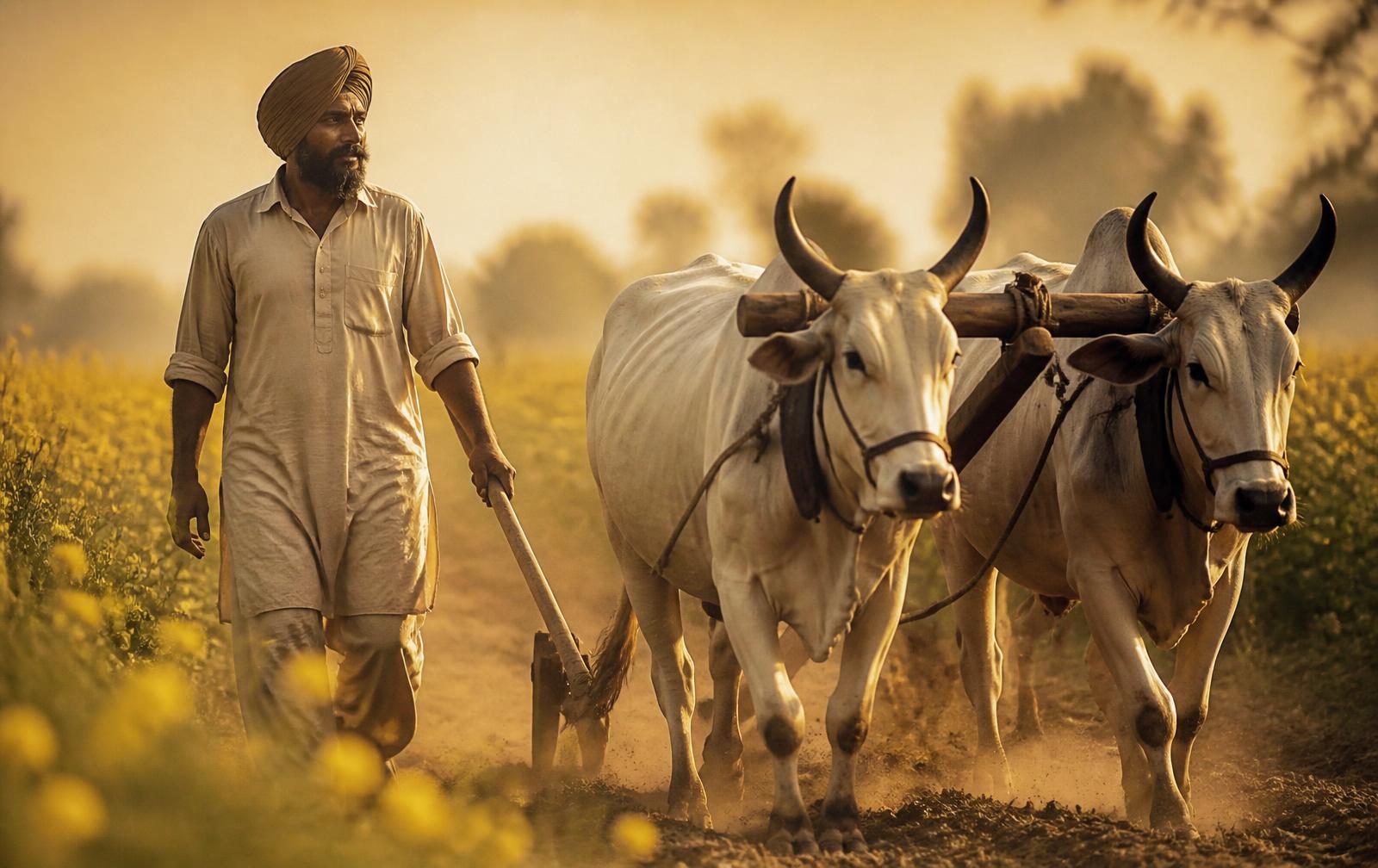
Kurta Pyjama — The Everyday Classic
The kurta — a long tunic — paired with a straight pyjama or churidar is the everyday uniform. Simple, breathable, made for the Punjabi summer. On festival days it is elevated in silk, with mirror work or gota trim.
Patiala Salwar and the Suit
The Patiala salwar — with its dramatic pleats — is arguably Punjab's most exported women's silhouette. Worn with a fitted kameez and a light dupatta, it defines occasion dressing across South Asia.
Phulkari — Embroidered Identity
Phulkari dupattas and shawls are heirlooms. Traditionally handspun and hand-embroidered, they are gifted at weddings and passed down. Modern designers reference phulkari in prints, but the real thing is still made in villages across Patiala and Bathinda.
Turban — The Crown
The turban (pagg / dastaar) is not clothing — it is identity. In Sikhi it is an article of faith. Styles vary — Patiala Shahi, Morni, Dumalla — each speaking to region, generation and personality.
The Modern Chapter — Punjabi Streetwear
The last decade has seen Punjabi identity move into hoodies, oversized tees, varsity jackets — the language of global streetwear. BAAG belongs to this movement: heavyweight cotton, oversized cuts, graphics rooted in Khanda, Sher, phulkari and Chardi Kala.
Punjabi clothing is no longer just what your grandmother wove. It is also what you throw on to walk out the door.
Frequently Asked
- What is traditional Punjabi clothing called?
- For men, kurta pyjama; for women, the Punjabi suit (kameez with salwar or Patiala salwar) paired with a dupatta. Phulkari embroidery is a signature textile.
- What is modern Punjabi streetwear?
- Modern Punjabi streetwear — brands like BAAG — reinterprets heritage motifs (Khanda, Sher, phulkari, Chardi Kala) on heavyweight oversized tees, hoodies and outerwear.