Where the Word Comes From
Desi — from the Sanskrit desh, meaning homeland — is what South Asians call their own, whether they are in Ludhiana, Leicester or Brampton. It is not a style word. It became one because the diaspora needed a shorthand for clothing that referenced home without dressing up as a wedding guest.
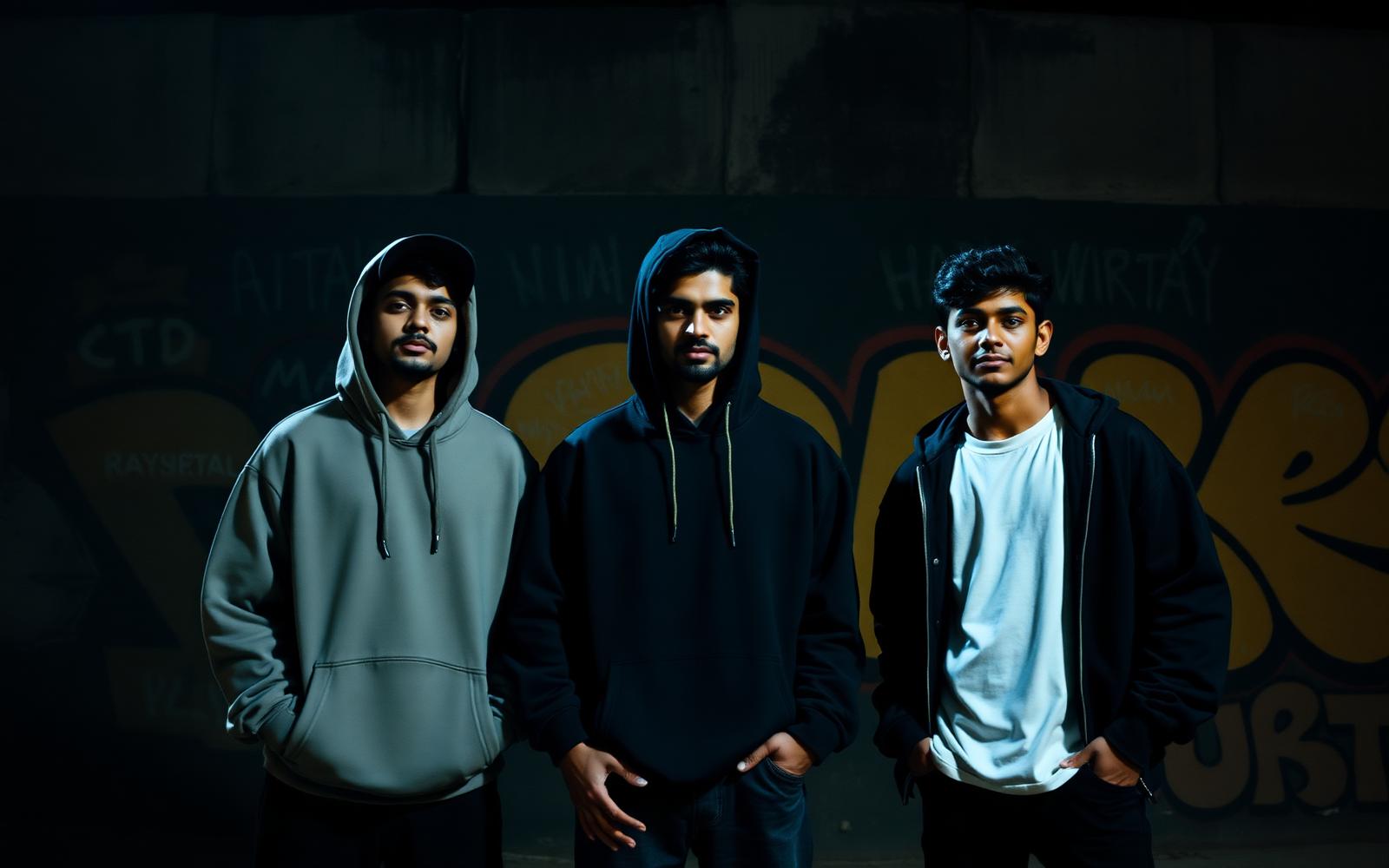
Desi streetwear is the result: garments cut to global streetwear standards — oversized, heavyweight, boxy — carrying South Asian visual language as the design, not the punchline.
Desi Merch vs Desi Streetwear
Desi merch prints a joke or a film reference on the cheapest available blank and sells on impulse. It has its place. But it wears out in a season, and nobody keeps it.
Desi streetwear starts at the garment. A 280 GSM combed cotton body, bio-washed and pre-shrunk, side-seamed with a taped neck and a real drop shoulder, is a piece you would buy plain. Only then does the label earn the right to put a Khanda, a Sher or phulkari geometry on it.
The second test is restraint. One symbol per garment, at generous scale, with no English subtitle explaining what it means. Novelty printing crowds; streetwear edits.
Why Punjab Leads the Category
Punjab has the densest visual vocabulary in South Asia — the double-edged Khanda with its chakkar, phulkari worked in silk floss on khaddar, the flowing counters of Gurmukhi, wheat, five rivers, the lion. It also has a diaspora that carries identity loudly by habit.
That combination is why Punjabi streetwear reads as the leading edge of desi streetwear: there is enough material to design from for a decade, and an audience that already dresses with intent.
How to Buy Desi Streetwear Well
Check the GSM. Anything under 200 is a fast-fashion blank regardless of the graphic. Check for side seams — tubular bodies twist after a few washes. Check whether the artwork is original or a marketplace clipart pack; original work has irregularities that stock files do not.
Check the palette. Serious labels keep colours limited so the graphic stays the loudest element. And check whether the brand can explain the symbol it is selling. If it cannot, it is borrowing.
What BAAG Builds
BAAG is desi streetwear as a discipline: designed in Chandigarh, printed in Punjab, cut at 280 GSM, released in small numbered runs. Sher, Khanda, Mitti, Chardi Kala — one idea per garment, drawn in-house.
Start with the Punjabi t-shirts collection, or read the Punjabi clothing guide for the full vocabulary before you buy.
Frequently Asked
- What does desi streetwear mean?
- Desi streetwear is South Asian visual language — Punjabi, Sikh, Indian symbols and script — applied to garments built to global streetwear construction standards: oversized, heavyweight, boxy, small-run.
- Is a desi tshirt the same as desi streetwear?
- Not always. Most desi tshirts are novelty prints on lightweight blanks. Desi streetwear starts with a heavyweight, well-constructed garment and treats the graphic as design rather than a joke.
- Which is the best desi streetwear brand in India?
- Judge by construction and originality rather than reach: look for 280 GSM or heavier cotton, side seams, taped necks and in-house artwork. BAAG builds to that standard from Punjab.